
Loading...
Serving Spokane Valley, WA and surrounding areas. (509) 508-5560
Sloped yards, eroding hillsides, and failing walls are a common problem in Spokane Valley. We build retaining walls with the drainage and footing depth this climate demands, and handle the permits so you don't have to.
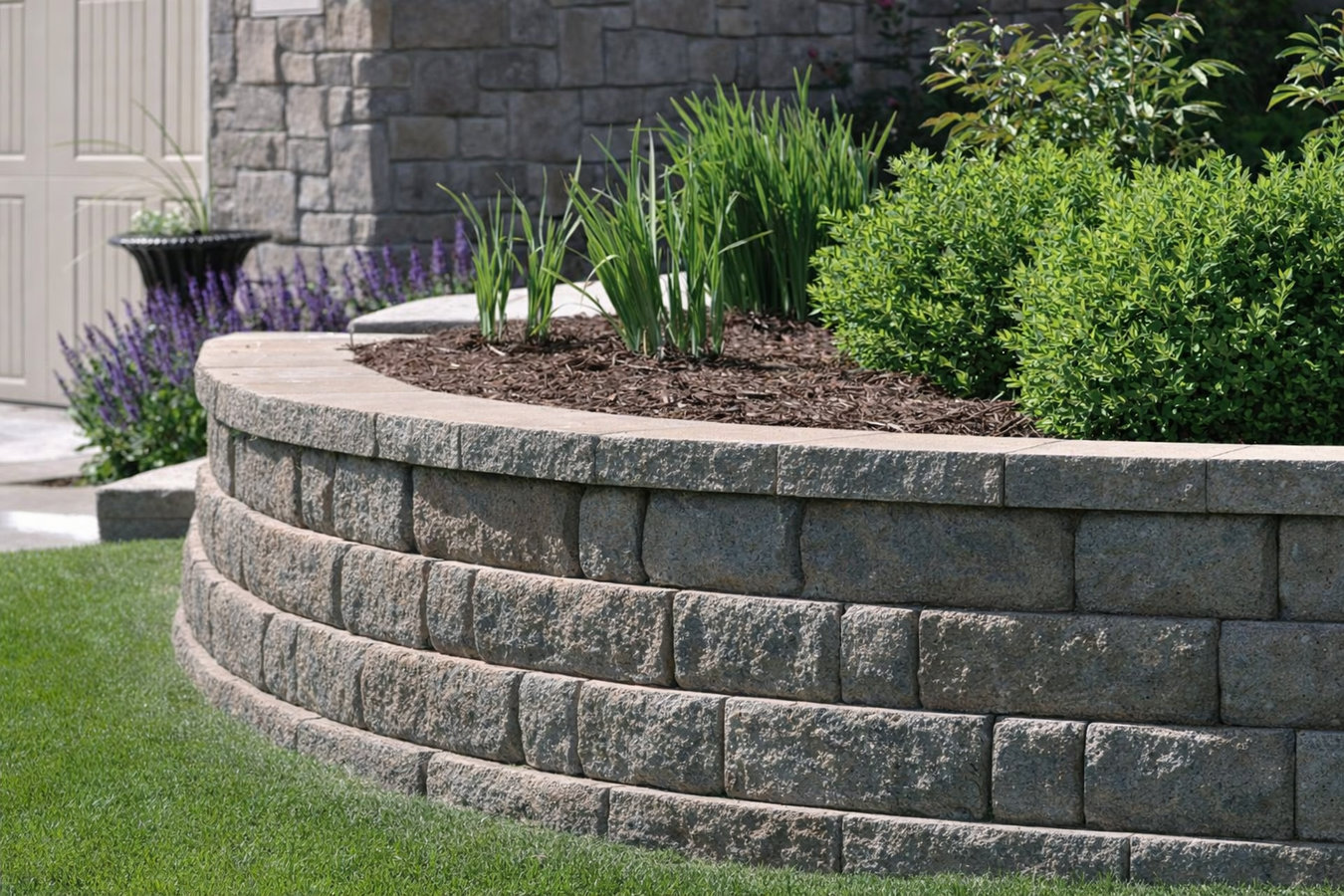
Retaining wall construction in Spokane Valley holds back soil on sloped or uneven ground, stopping erosion and turning unusable hillside space into flat, stable yard area - most residential walls are complete in one to five days depending on height and length.
The most important part of any retaining wall is what you cannot see when it is done - the drainage system hidden behind it. Gravel and a perforated pipe carry water away before pressure builds against the wall from behind. Without that, even a well-constructed wall can fail within a few years. Spokane Valley's freeze-thaw winters and glacial outwash soils make proper drainage even more critical here than in many other parts of the country. If your property also has erosion problems around masonry structures, our masonry restoration service addresses deteriorating existing structures alongside new wall construction.
If you notice bare patches forming on a hillside, or soil collecting at the base of a slope after a storm, your yard is actively eroding. Spokane Valley's spring snowmelt and summer thunderstorms accelerate this process, especially on lots with the fine loess soils common in this area. A retaining wall stops the movement and gives you back stable, usable ground.
A retaining wall that has started to tilt forward or shows horizontal cracks across its face is telling you the pressure behind it has become too much. This is especially common in Spokane Valley after a wet winter, when freeze-thaw cycles push against the wall repeatedly from behind. A leaning wall does not fix itself - the longer it is left, the more soil movement and potential damage to nearby structures you risk.
If you see standing water collecting near your home during spring melt or after a heavy rain, it may mean your yard's slope is directing water toward your foundation instead of away from it. A retaining wall combined with proper grading redirects that water and protects your foundation from long-term moisture damage - a particularly common issue on Spokane Valley lots graded quickly during rapid residential development in the 1990s and 2000s.
If part of your property is so sloped that you cannot mow it safely, plant a garden, or let kids play on it, a retaining wall can turn that wasted space into a flat, usable terrace. Many Spokane Valley homeowners with hillside lots have discovered that a well-placed wall essentially adds a new outdoor room to their property - one that improves both function and curb appeal.
We build retaining walls in concrete block, natural stone, and poured concrete, with the material chosen based on wall height, load requirements, and what fits your property's look. Every wall includes a properly designed drainage system behind it - gravel backfill and a perforated pipe that carries water away before it can build pressure against the face. For properties that also need concrete block structural walls for the home itself, our concrete block walls service handles that scope alongside or separately from outdoor retaining work.
We handle permit applications through the City of Spokane Valley Building Division when required - which is common for walls over a certain height - and schedule any required city inspections on your behalf. Every project includes a written estimate, a clear scope of work, and a warranty on materials and labor - the same baseline any reputable retaining wall contractor should provide.
The most common choice for residential projects - strong, long-lasting, and well-suited to Spokane Valley's freeze-thaw conditions with the right footing depth.
Best for homeowners who want a natural, textured look - stone walls blend well with landscaping and carry a lifespan of 50 or more years when built correctly.
Interlocking segmental block systems are engineered for residential retaining applications and allow for curves and tiered designs that fit irregular lot shapes.
For steep slopes that require more than one wall - a terraced design distributes the load and creates usable flat spaces at each level rather than one tall single wall.
For properties with an existing wall that is leaning, cracking, or no longer holding back soil effectively - we remove the old structure and rebuild correctly with drainage from the ground up.
Spokane Valley sits on soils left behind by ancient glacial floods and volcanic activity - a mix of glacial outwash, silt, and loess that behaves differently than soils in most other parts of the country. Loess in particular is prone to erosion and can become unstable when wet, which is exactly what happens during the spring snowmelt period each year. Combine that with a climate that brings repeated freeze-thaw cycles from November through March - temperatures regularly drop below freezing and climb back above it within the same week - and you have conditions that put real stress on retaining walls every season. A wall built without drainage designed for these conditions will start to fail sooner than you'd expect. USDA Natural Resources Conservation Service research on soil erosion in this region supports the case for proper drainage and footing depth in every retaining wall installation.
We serve homeowners across the valley, including properties in Mead where hillside lots are common and sloped yards frequently need structural help, and in Airway Heights where newer subdivisions sometimes have drainage patterns that direct water toward foundations. Spokane Valley has its own Building Division with permit requirements separate from the City of Spokane, and we know exactly when a permit is needed and how to navigate that process on your behalf.
We ask a few basic questions - the approximate size, what problem you're trying to solve, and whether there's an existing wall involved. Then we schedule a free on-site visit to walk your property and look at the slope, the soil, and the drainage before giving you any numbers.
Within a few days you'll receive a written estimate breaking down materials, labor, and any permit costs. If your wall requires a city permit - common for taller walls in Spokane Valley - we handle the application and schedule any required inspections through the city's Building Division for you.
Before digging starts, utility lines are marked through the state's free call-before-you-dig service. The crew then excavates to the proper footing depth for Spokane Valley's frost conditions - this is the noisiest and most disruptive phase, typically taking one day for most residential walls.
The wall is built from the ground up with drainage gravel and a perforated pipe installed behind it as each course goes up. After the wall is complete, the crew backfills, compacts, and cleans up the site. We walk you through the finished work and point out the drainage outlet location before we leave.
We walk your property, explain exactly what we see, and give you a written quote before any work begins. No obligation, no pressure.
(509) 508-5560The drainage system behind your wall determines whether it lasts 5 years or 50. We design the drainage layer - gravel depth, pipe sizing, outlet location - before construction starts, not as an afterthought. In Spokane Valley's saturated spring soils, this step is not optional.
Spokane Valley incorporated as its own city in 2003 and manages permits through its own Building Division - separate from the City of Spokane. Unpermitted walls are one of the more common surprises that complicate home sales here. We handle every required permit and inspection from start to finish so your project is on the record. City of Spokane Valley Building Division
Frost depth in the Spokane Valley area typically reaches 12 to 18 inches in a normal winter. A wall footing that does not account for this will shift as the ground freezes and thaws repeatedly. We set footings below the frost line so the wall base stays stable through every season.
Washington requires contractors doing retaining wall construction to be licensed through the Department of Labor and Industries. You can verify our license status yourself in minutes using the state's free online lookup. We carry liability insurance and workers' compensation coverage on every job - and can show documentation before work starts.
A concrete block or natural stone retaining wall built correctly in Spokane Valley can last 40 to 50 years with minimal maintenance - that longevity starts with a contractor who understands local soils, frost depth, and drainage requirements before the first shovel goes in the ground.
Repair and restore aging brick, stone, and block structures on your property before deterioration spreads to surrounding areas.
Learn MoreBuild structural concrete block walls for foundations, property boundaries, and load-bearing applications using the same freeze-rated construction methods.
Learn MoreSpring and summer slots go quickly - reach out now for a free on-site estimate and get on the schedule before the ground freezes again.