
Loading...
Serving Spokane Valley, WA and surrounding areas. (509) 508-5560
Cracked asphalt and shifting concrete are common in Spokane Valley. We install paver driveways over a properly built base so the surface holds through hard freezes and looks great for decades.
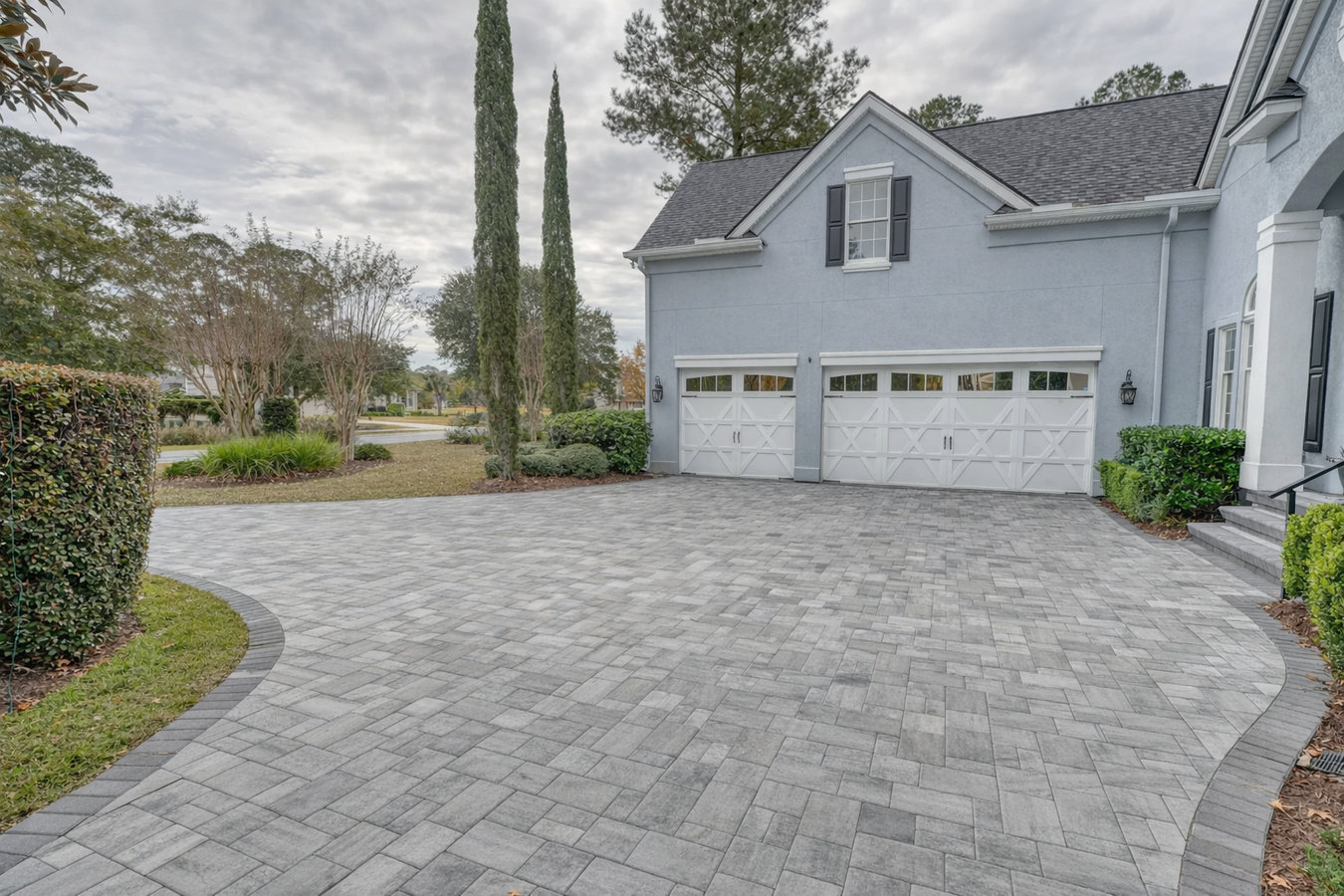
Driveway pavers in Spokane Valley are individual concrete, brick, or stone units set over a compacted gravel base - replacing asphalt or cracked concrete with a surface that flexes with the ground below it, and most standard two-car driveways are complete in two to five days on-site.
A lot of Spokane Valley homes from the 1960s through 1980s still have their original asphalt driveways - now cracked, faded, and past their useful life. Replacing that surface with pavers means choosing a material built for this climate, with individual units that can handle freeze-thaw movement without cracking across a large slab. If you are also thinking about improving your outdoor walkways, our walkway construction service coordinates naturally with a new driveway installation.
When asphalt develops cracks that look like alligator skin or a spiderweb, the surface has reached the end of its structural life. This is especially common in Spokane Valley homes with driveways 40 years old or more. At that point, patching is a short-term fix at best - a full replacement makes more sense over the next ten years.
If parts of your driveway are noticeably higher or lower than they were last fall, frost has pushed the base material around under the surface. Spokane Valley's cold winters make this a regular problem, and it tends to get worse with each cycle. Pavers over a properly prepared base handle this kind of ground movement far better than a solid slab.
Standing water on a driveway means the drainage is not working - either the slope is off or the surface has settled unevenly. In Spokane Valley, where spring snowmelt can be significant, pooling water accelerates surface wear and creates ice hazards in colder months. A new paver installation lets the contractor regrade the surface and, in some cases, install permeable pavers that let water drain through.
Curb appeal matters for your enjoyment and your home's resale value, and a crumbling or stained driveway undercuts an otherwise well-maintained property. If you are planning to sell in the next few years, a new paver driveway tends to show up clearly in listing photos and first impressions - Spokane Valley buyers notice the difference.
Every driveway paver installation starts with the base - the compacted gravel layer beneath the surface that determines how well the finished driveway holds up through Spokane Valley's freeze-thaw seasons. We excavate, compact, and build that base to the depth this climate requires, then set pavers in your chosen material and pattern. For homeowners who also want outdoor hardscaping to match, our retaining wall construction service uses the same base-building approach on sloped properties.
We handle permit applications through the City of Spokane Valley when the project requires them, remove and haul away your existing surface, and walk you through the finished work before we leave. Every project includes a written scope of work and a warranty on both materials and labor.
The most popular choice - durable, available in many colors and shapes, and well-priced for a standard replacement project.
Best for homeowners who want a classic, timeless look that coordinates well with brick exterior homes and established landscaping.
Suited for homeowners prioritizing a high-end, unique appearance - each stone is slightly different, giving the driveway a one-of-a-kind finish.
For properties where drainage is a concern - water passes through gaps between pavers rather than running off, reducing pooling and potential stormwater compliance issues.
For homeowners replacing cracked asphalt or concrete - we remove the old surface and dispose of it so the base can be properly built from the ground up.
Spokane Valley averages around 45 inches of snowfall per year, and the ground can freeze several inches deep during cold snaps between November and March. That repeated freeze-thaw movement is the main reason poured concrete and asphalt driveways fail here faster than in milder climates. Pavers flex with that movement rather than cracking across a single slab - and if a unit does shift after a hard winter, it can be reset without replacing the whole surface. The Spokane Valley area also has fine-grained loess soils that compact unevenly, which means base preparation matters more here than in many other parts of the country. Washington State University Extension has documented these soil characteristics across the Inland Northwest, and they directly affect how a base should be built.
We work across the full Spokane Valley area, including homeowners in Liberty Lake who are replacing driveways on newer lots with specific drainage considerations, and in Millwood where older homes have original asphalt driveways that are well overdue for replacement. Spokane Valley manages its own permit process through the City of Spokane Valley Community Development department - separate from the City of Spokane - and we know when a permit is needed and how to handle it.
When you reach out, we schedule a time to come to your property - not just give you a rough number over the phone. We look at the size of your driveway, the condition of what is there now, how the land drains, and what you are hoping the finished product looks like.
You will receive a written estimate spelling out exactly what work is included, what materials will be used, and the total cost. We walk you through paver options - colors, shapes, textures - and help you choose a pattern that fits your home's style before anything is signed.
We remove the existing surface and haul it away, then excavate and compact a gravel base built to the depth Spokane Valley's winters require - typically eight inches or more. This step is the most important part of the job, even though you will not see it when it is done.
Pavers go down one by one in the pattern you chose, with edge restraints locking the surface in place and joint sand compacted into the gaps. Before we leave, we walk the finished driveway with you and address anything that needs attention. Plan to keep vehicles off the surface for 24 to 48 hours after completion.
We come to your property, look at what you have, and give you a clear quote with no obligation. Most estimates are scheduled within a week.
(509) 508-5560We excavate and compact to the depth Spokane Valley's hard freezes require - not a generic depth. A driveway that fails in two winters almost always traces back to a base that was too thin for the local frost depth. We ask about soil conditions and drainage before we dig, not after.
Spokane Valley manages its own permit process - separate from the City of Spokane. We know exactly when a driveway permit is required and handle the application for you, including any coordination needed with the city's stormwater requirements. You do not have to make a single call to the city.
Every project starts with a written estimate that spells out what is included, what materials will be used, and the total cost. If something changes during excavation, we tell you before we proceed - not after the fact. ICPI installation standards guide how we build every base and set every paver.
Washington requires contractors doing driveway and hardscaping work to be licensed through the Department of Labor and Industries. You can verify our license status yourself using the state's free contractor lookup tool. We carry liability insurance and workers' compensation coverage on every job.
A properly installed paver driveway in Spokane Valley can last 25 to 50 years with basic maintenance - far longer than asphalt, which typically needs replacement every 20 to 30 years. That long-term performance starts with the base, and the base starts with a contractor who knows what this climate demands.
Stop slope erosion and create usable yard space with a concrete block or natural stone retaining wall built for Spokane Valley's freeze-thaw seasons.
Learn MoreExtend your paver project from the driveway to the front door with a walkway that matches in material, pattern, and base depth.
Learn MoreOur installation calendar fills up fast once the weather turns - reach out now to get on the schedule before spring spots are gone.