
Loading...
Serving Spokane Valley, WA and surrounding areas. (509) 508-5560
A shifting or crumbling block foundation puts everything above it at risk. We install reinforced concrete block foundations in Spokane Valley with frost-depth footings, proper waterproofing, and city permits handled from start to finish.
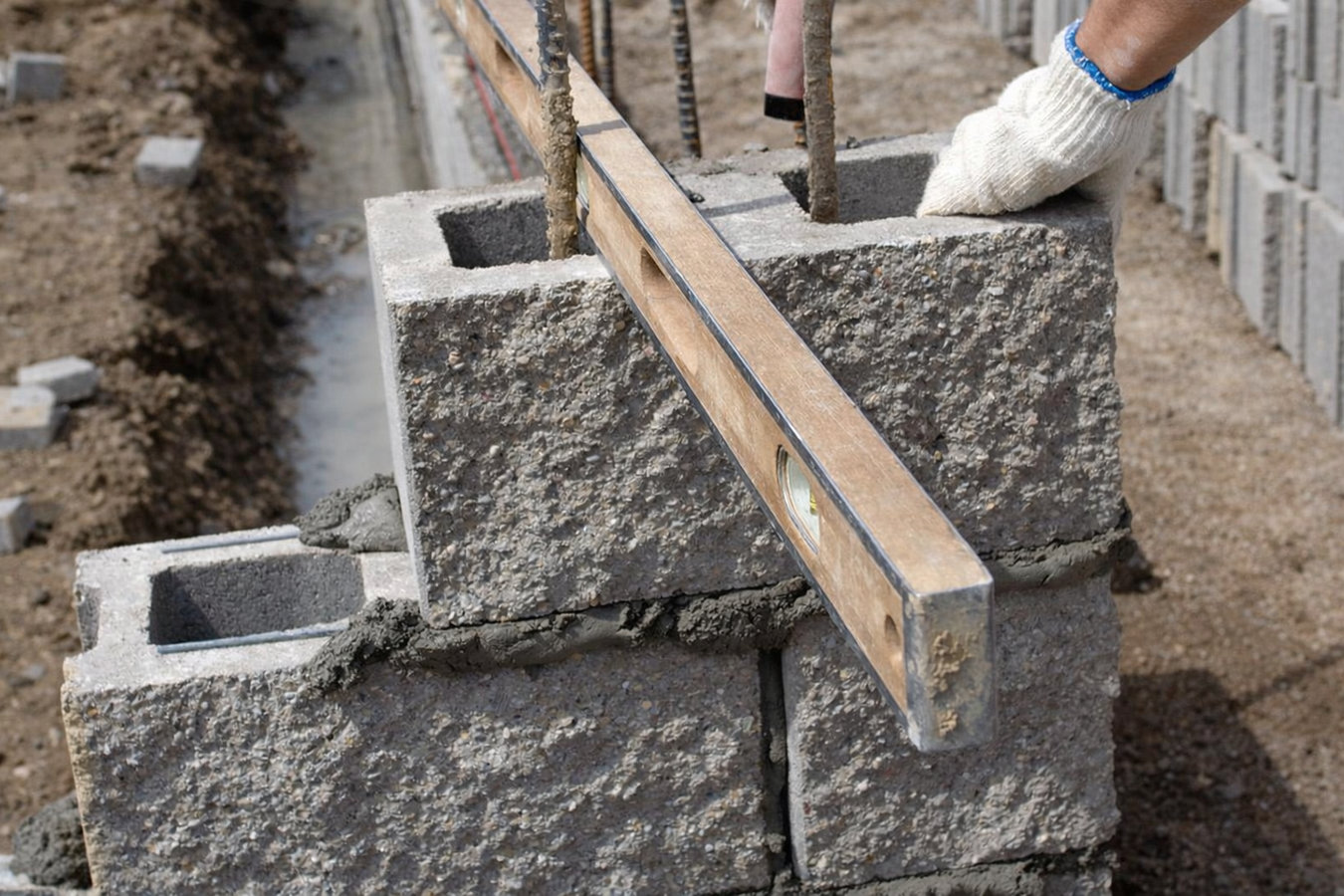
Foundation block wall installation in Spokane Valley involves excavating to frost depth, pouring a concrete footing, then stacking mortar-set concrete masonry units with steel reinforcement through the hollow cores - most residential projects run from a few days to two weeks depending on wall size and site prep.
A block foundation is a series of hollow concrete blocks stacked and mortared together to form the structural base of a home. The cores are filled with concrete and reinforced with steel rods to carry the load above. This type of foundation is common in Spokane Valley's older neighborhoods - many homes built from the 1950s through the 1980s use this system, and some are now due for repair or partial replacement. If your existing block wall is showing stair-step cracks or signs of water intrusion, our foundation repair service covers targeted fixes before full replacement becomes necessary.
The Portland Cement Association recommends specific mortar strength ratings for exterior foundation masonry in freeze-thaw climates - the same standards that apply to every block wall we build in Spokane Valley.
Cracks that follow a stair-step pattern along the joints between blocks - rather than cutting straight through the block itself - mean the wall is shifting or settling. In Spokane Valley, this pattern often appears after a hard winter, when repeated freeze-thaw cycles have pushed the soil against the wall. It does not always mean the wall is about to fail, but it warrants a professional assessment before the next winter.
A chalky white residue or damp patches on the interior of your basement or crawl space walls means water is working through the blocks. The white powder is mineral deposits left behind as water evaporates - on its own it is harmless, but it tells you the wall is not keeping moisture out. Left unaddressed, this leads to mold, damaged framing, and eventually structural problems.
Stand back and look at your basement wall from the inside. If any section bows or leans inward - even slightly - the soil pressure outside is winning. This is more common in Spokane Valley's older neighborhoods where original walls were built without modern reinforcement and have handled decades of seasonal pressure. Bowing should be evaluated quickly because it worsens over time.
When a foundation wall shifts, the house frame above it shifts too. If doors or windows that used to work smoothly now stick, drag, or leave visible gaps, it is worth having a mason check the foundation - not just the door frame. This symptom often shows up before visible cracks do, giving you an early warning if you pay attention to it.
We handle new foundation block wall installation, partial wall replacement, and structural repair for Spokane Valley homes. Every project starts with an on-site assessment - we look at soil conditions, existing structure, and drainage before we write a number. For homes adding finished living space above a crawl space or planning an addition, our outdoor kitchen masonry work shows the same structural approach applied to above-grade masonry builds where a proper footing is equally critical.
Permits are pulled through the City of Spokane Valley building department before work begins. Every project includes steel core reinforcement and waterproofing rated for this climate. The American Concrete Institute sets the reinforcement and grouting standards we follow on every foundation wall - the same standards a city inspector will look for when they review the work.
Best for new construction, additions, or accessory structures needing a full concrete block foundation built to current Spokane Valley code.
Right for homeowners with isolated sections of deteriorated block that do not require replacing the entire foundation - saves cost while addressing the structural concern.
Suited for existing block walls that are structurally sound but letting water through - exterior sealing and drainage added without full replacement.
For older block walls that were built without steel reinforcement - cores are filled with grout and rebar added to improve resistance to soil pressure and freeze-thaw movement.
Spokane Valley's winters bring regular freeze-thaw cycles that put real stress on foundation walls. The ground freezes and thaws repeatedly through the season, causing the soil around your foundation to expand and contract. Over decades, this movement causes block walls built without proper reinforcement or drainage to crack, bow, or let in water. Contractors working here need to account for frost depth - roughly 18 to 24 inches in this part of Washington - and use mortar mixes rated for these conditions. Homeowners in Medical Lake and across the valley have dealt with this issue in homes built before modern code requirements were in place.
The glacially deposited soils under much of Spokane Valley - a mix of sand, gravel, and hard caliche layers - can complicate excavation and affect how a footing behaves over time. Caliche is a calcium-rich hardpan that forms naturally underground and requires heavier equipment or careful hand-digging to get through. Homeowners in Spokane Valley neighborhoods built during the postwar decades are most likely to encounter this - contractors with local experience factor it into their estimates rather than treating it as a surprise upcharge once digging starts.
We respond within one business day. Most foundation questions cannot be answered accurately by phone - an on-site look tells us what is actually there before we quote anything.
We walk the site, assess soil and access conditions, and explain what we recommend and why. You receive a written estimate breaking down labor, materials, permit fees, and waterproofing separately - no lump-sum numbers that hide what you are paying for.
We pull the permit through the City of Spokane Valley before work begins. Excavation, footing pour, and block laying follow - each course of block is set with mortar and allowed to reach working strength before the next goes up.
Once the wall passes city inspection, we seal the exterior, backfill and compact the soil, and clean the site. You receive copies of the permit and inspection records - useful if you sell the home or make an insurance claim later.
We come to your home, assess the actual conditions, and give you a written quote - no phone guesses, no surprises.
(509) 508-5560Foundation work in Spokane Valley requires a city permit and inspection. We handle the permit application ourselves and schedule every required inspection - you receive documented proof the work was done correctly, which matters when you sell your home or file an insurance claim.
Every foundation wall we build in Spokane Valley goes on a footing that reaches below the frost line - typically 18 to 24 inches here. Skipping this step saves time upfront but produces a wall that shifts after the first hard winter. We do not build that way regardless of schedule pressure.
Spokane Valley's glacial outwash soils and caliche layers can slow excavation and change how a footing needs to be set. We have worked in these conditions across the valley and factor them into estimates rather than treating them as unexpected upcharges once digging starts. The Mason Contractors Association of America supports the training and standards we apply on every project.
Block walls are porous by nature - moisture works through them over time if the exterior is not sealed and drainage is not managed. We include exterior sealing and drainage in our foundation work scope, not as an optional add-on. A wall without proper moisture management in this climate is a wall that will let water in.
Foundation work is the kind of project where cutting corners is not visible until years later - by which point the fix costs more than doing it right the first time. We build Spokane Valley foundations to the standards a city inspector and a future home buyer will both be satisfied with.
Permanent brick, stone, or block outdoor kitchen structures built on engineered footings - the same structural approach applied above grade.
Learn MoreTargeted repairs for existing block foundations showing cracks, bowing, or water intrusion - before full replacement becomes necessary.
Learn MoreSpokane Valley's masonry season fills fast - lock in your spot now and have your foundation work done before the fall weather closes in.